How dietary shifts have altered tooth enamel composition
Before we dig in into the topic… Here is some relevant information:
Enamel is the hard, protective outer layer of a tooth. It is made mostly out of minerals like calcium and phosphorus. The main function of Enamel is to serve as a shield, guardingdentin and the inner pulp from everyday use. The figure below is for visual purposes to know more about tooth composition.

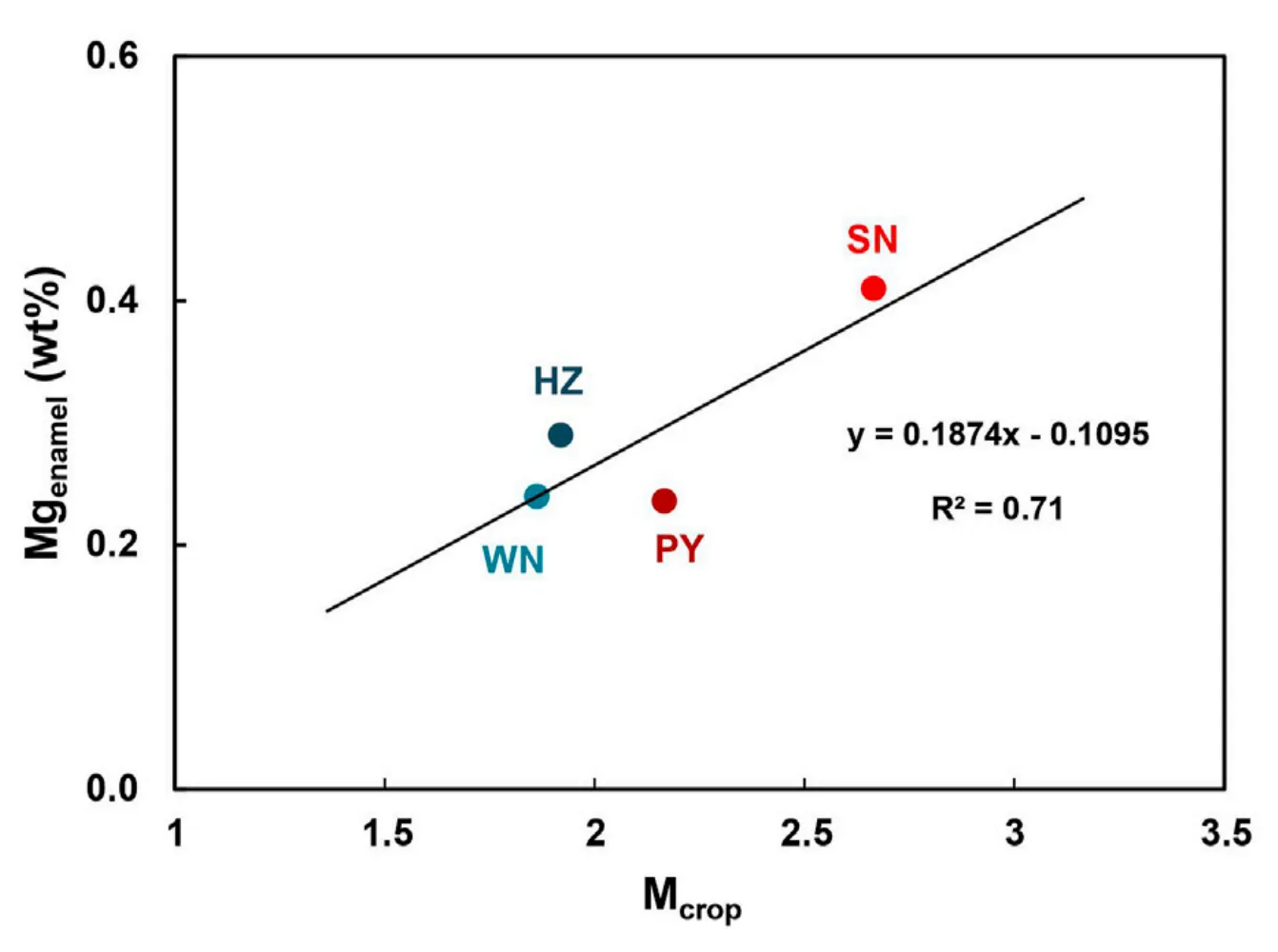
As shown in the previous topics. Diet has an effect on teeth. Enamel forms once during childhood and does not remodel.Its chemical composition is a permanent record of diet formation.In a way, how much magnesium you eat as a child may have an effect on how much magnesium your enamel may have (Gao et al. 2023).Figure 1) shows the relationship mentioned before.The x axis represents the amount of magnesium crops have in different regions and the y axis represents the amount of magnesium located in the human tooth.Diets that consist of mostly rice have heavier Mg isotopic values while people who eat more wheat or cereals show lighter Mg values.This is because Grain processing reduces Mg which affects its availability in enamel formation. For instance, the Shanxi (SN) region is in the south and has a heavy production of rice for survival. It can be observed that of all the regions it is the region with the most Mg percentage in the enamel. On the other hand, the Weinan (Wn) region takes advantage of the environment and produces more grain which also reduces Mg intake. It is noted that this region contains the lowest Mg percentage in the enamel. Both regions are in China, but the difference in diet leads to a drastic change in enamel composition.
Now, we have seen enamel changes depending on diet. This happens in the modern era, but does that mean it also happened from our ancestors to us?
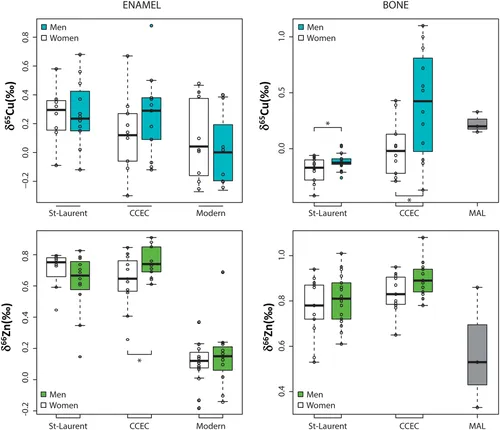
To answer the previous question, it is important to know that Zinc is another nutrient important to enamel formation. Animal tissue (and thus animal diet) exhibit lower zinc values while plant-based foods display higher values (Kiervia 2016). Observing the zinc can serve as an indicator of the balance animal vs plant food consumption. Modern diets include more meat/fish relative to older historical diets. Figure 2 shows the comparison between Stlaurent (17th -18th century population), CCEC (19th century) and modern (20th century). We observe that the modern population has a lower Zn concentration while the other two have a high concentration. This has show a shift in diet between the different times in human history. It is possible to find and eat more meat now than ever before. Especially as a baby, this has a high impact on enamel composition. Quality of life has increased dramatically, making some human traits to adapt.